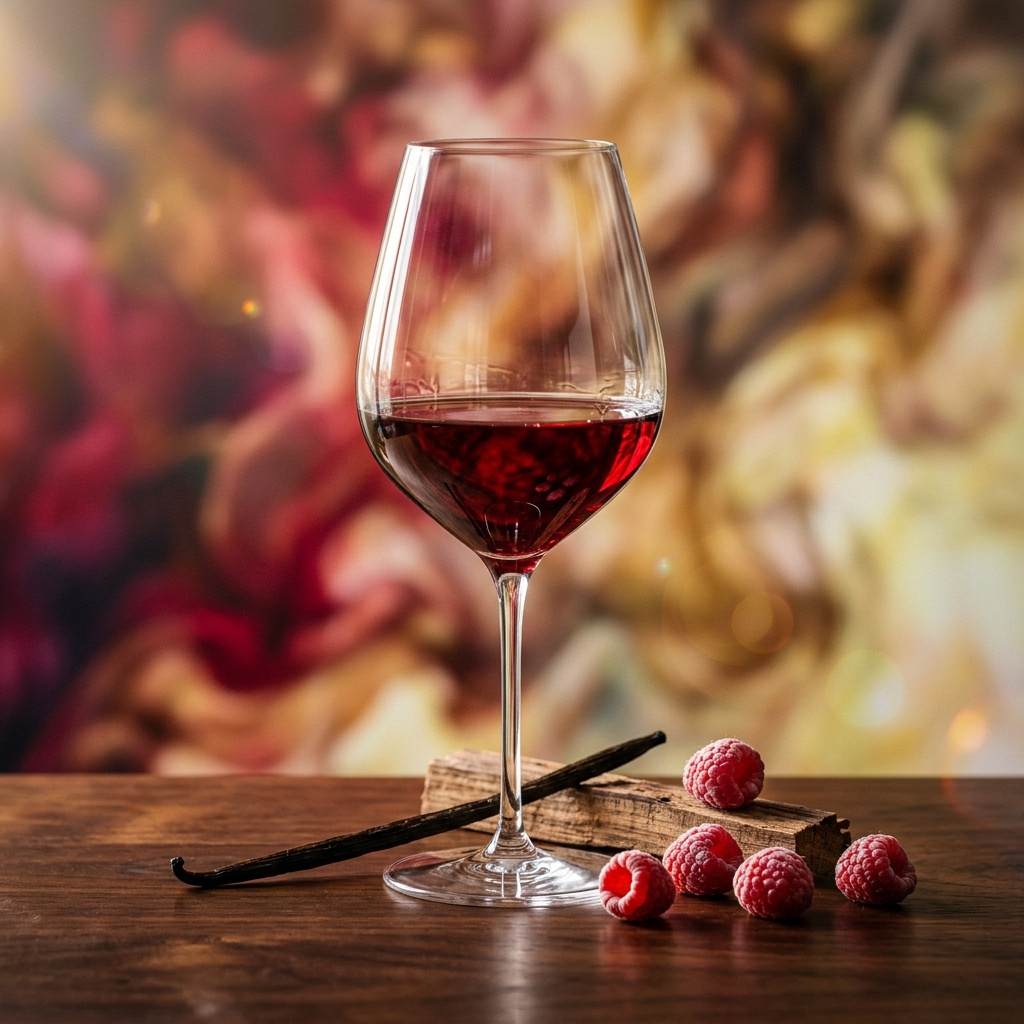
You Can Smell It, But You Can’t Name It
Quick Answer: The wine aroma wheel organizes wine scents into three logical tiers: primary (from the grape), secondary (from winemaking), and tertiary (from aging). By starting at the center and moving outward, you can quickly find the exact descriptors needed for a professional tasting note.
You swirl the glass and bring it to your nose. You can definitely smell something fruity, maybe a little floral, or perhaps a hint of something earthy. But when you try to put it into words, your mind goes blank.
This is one of the most common frustrations for wine students. The problem is rarely your nose; it is your vocabulary. This is exactly what the wine aroma wheel is designed to solve.
Whether you’re preparing for your WSET Level 2, tackling the Level 3 blind tasting, or simply trying to describe wine more confidently, mastering the aroma wheel is a high-value skill.
What Is the Wine Aroma Wheel?
The wine aroma wheel is a visual tool that organizes wine scents into a hierarchical structure. It moves from broad categories in the center to increasingly specific descriptors toward the outer edge.
Developed in the 1980s by Dr. Ann Noble at UC Davis, it has since been adopted by educators worldwide. It serves as the foundation for the WSET Systematic Approach to Tasting (SAT).
The key insight behind the wheel is simple: it’s easier to identify a category before a specific aroma. Before you say “raspberry,” you first recognize “red fruit.” Before you say “vanilla,” you first identify “oak.” Working from the general to the specific prevents you from getting stuck.
The Three Core Aroma Categories
At the heart of every aroma wheel are three fundamental categories. Understanding these is the foundation for your wine tasting notes vocabulary.
| Category | Origin | Examples |
|---|---|---|
| Primary | The grape and its growing environment (terroir) | Citrus, stone fruit, florals, herbs, minerals |
| Secondary | The winemaking process (fermentation, oak, yeast) | Bread, butter, vanilla, cedar, toast |
| Tertiary | Aging (reductive bottle age or oxidative aging) | Leather, forest floor, dried fruit, petrol, honey |
This three-tier structure directly mirrors how WSET examiners think about wine and how they expect you to structure your tasting notes.
How to Use the Aroma Wheel Step by Step
The aroma wheel is not something you memorise overnight. It’s a tool you use during practice tasting until the structure becomes second nature. Here’s how to work with it effectively.
Step 1: Identify the Tier
Before you reach for a specific word, ask yourself one question: where does this aroma come from?
- Does it smell like fresh fruit, flowers, or herbs? → Primary
- Does it smell like bread, butter, vanilla, or cedar? → Secondary
- Does it smell like leather, tobacco, or dried fruit? → Tertiary
Most wines will contain aromas from multiple tiers. A classic Chardonnay, for example, might show primary green apple and citrus, secondary butter (from malolactic fermentation), and secondary vanilla and toast (from oak aging).
Step 2: Narrow Down the Family
Once you’ve identified the tier, move to the middle ring: the aroma family.
If you’ve identified a primary aroma, ask yourself: is it a citrus fruit, a stone fruit, a tropical fruit, a red berry, or something floral? If it’s secondary, is it from oak (vanilla, cedar), yeast (bread, pastry), or MLF (butter)?
Naming the family first gives you a structure to anchor your note even before you find the precise word.
Step 3: Name the Specific Descriptor
Now move to the outer ring to find the specific descriptor. This is the exact word that goes into your written tasting note.
The difference between a distinction-level note and a bare pass often comes down to specificity. For example, “Citrus” should become “lemon and grapefruit.” “Red fruit” becomes “fresh raspberry and red cherry,” and “Oak” becomes “vanilla and a hint of toast.”
WSET Tip: During the Level 3 tasting exam, examiners are not marking you on whether you correctly identify the wine. They are marking you on the accuracy and precision of your descriptors. Using the WSET aroma categories from the wheel directly translates into marks.
Step 4: Build Your Tasting Note
Once you’ve worked through the wheel for each aroma you detect, arrange your descriptors logically in your tasting note. The standard order follows the SAT grid:
- Nose condition: Is the wine clean or faulty?
- Intensity: How pronounced are the aromas? Options include light, medium, medium-plus, and pronounced.
- Aroma characteristics: Your specific descriptors, grouped by family.
- Development: Identify if the wine is young (primary), developing (some secondary/tertiary), or complex (dominated by tertiary).
You can explore every aroma category interactively in the VinoPrep Aroma Wheel. Simply click any section of the wheel to see the full vocabulary list for that tier and family.
Primary Aromas: The Language of Grape and Terroir
Primary aromas are the most intuitive because they come directly from the grape variety itself. Different grapes have characteristic aroma profiles that allow experts to make educated guesses about the variety. This is what makes variety recognition possible in blind tasting.
White Fruit & Citrus Primaries
These are typical of cooler-climate white grapes and are essential for how to describe wine aromas accurately:
- Green apple, pear: Classic for unoaked Chardonnay and Pinot Grigio.
- Lemon, lime, grapefruit: Found in Sauvignon Blanc, Riesling, and Albariño.
- Peach, apricot: Typical of Viognier and warmer-climate Chardonnay.
- Lychee: One of the most distinctive variety markers in wine, characteristic of Gewürztraminer.
- Passion fruit, mango: Common in Marlborough Sauvignon Blanc at peak ripeness.
Red & Black Fruit Primaries
These are the signature of red grapes and correlate strongly with the climate where the grapes were grown:
- Redcurrant, cranberry, red cherry: Cooler climates like Pinot Noir, Nebbiolo, or Gamay.
- Blackcurrant (cassis), blackberry: Warmer climates such as Cabernet Sauvignon, Merlot, or Malbec.
- Dried fruit (prune, raisin, fig): Very warm climates or late-harvest wines.
Floral Primaries
Florals are often the most fleeting aromas. They tend to appear on the first sniff and fade quickly, so train yourself to assess the nose immediately upon pouring.
- White blossom, elderflower: Muscat, Pinot Gris, and Sauvignon Blanc.
- Violet: Typical of young Syrah and Malbec.
- Rose: Characteristic of Gewürztraminer and many Rosé wines.
Herbaceous & Spice Primaries
These can be polarizing descriptors, but they are critically important for identifying certain varieties using our interactive wine descriptors tool:
- Green bell pepper (pyrazine): Cool-climate Cabernet Sauvignon and Sauvignon Blanc.
- Grass, cut herbs: Sauvignon Blanc, especially from the Loire Valley.
- Black pepper: A signature aroma for Northern Rhône Syrah.
- Eucalyptus, mint: Common in Australian Cabernet Sauvignon and some Shiraz.
Secondary Aromas: The Signature of the Winemaker
Secondary aromas develop during fermentation and winemaking, not from the grape itself. They tell you about the techniques the winemaker used in the cellar.
Yeast-Derived Aromas (Autolysis)
When wine ages on its lees (the dead yeast cells), it develops a distinct range of aromas known as autolytic characters:
- Bread, brioche, toast: Typical of Champagne, Crémant, and Cava aged on lees.
- Biscuit, pastry: A softer expression of autolytic character.
- Cheese, yoghurt: Found with more intense lees contact, common in some Muscadet Sur Lie.
These are the aromas you associate with high-quality sparkling wine. If you smell fresh bread in a Champagne, that is autolysis telling you the wine spent significant time on its lees.
Malolactic Fermentation (MLF) Aromas
MLF converts sharp malic acid into softer lactic acid. In addition to reducing acidity, it adds creamy notes:
- Butter: The most recognizable MLF descriptor.
- Cream, crème fraîche: A richer, rounder expression.
Oak-Derived Aromas
Oak is a secondary aroma because it is a winemaking choice. The type of oak (French vs. American), the size of the barrel, and the level of toast all influence which aromas develop:
- Vanilla, coconut: American oak, common in Rioja Reserva or Napa Cabernet.
- Cedar, pencil shavings: French oak, classic in Bordeaux or aged Burgundy.
- Clove, nutmeg: New French oak with a medium toast.
- Smoke, coffee, chocolate, char: Heavily toasted barrels, often found in premium Shiraz and Cabernet.
Key Exam Point: If you smell butter on a white wine, consider MLF as a cause, not oak. Oak gives you vanilla, cedar, and toast. Butter comes from MLF.
Tertiary Aromas: The Reward of Patience
Tertiary aromas are the most complex and highly valued by connoisseurs. They develop during aging, specifically through bottle maturation or deliberate oxidation.
Bottle-Age Tertiary Aromas
These develop through slow, reductive chemistry inside a sealed bottle over many years:
| Aroma | Typical Wine |
|---|---|
| Leather, game, barnyard | Aged Pinot Noir, Burgundy, Barolo |
| Tobacco, cedar | Mature Bordeaux |
| Petrol, kerosene | Aged Riesling (especially German or Alsatian) |
| Mushroom, truffle | Old Burgundy |
| Dried fruit, prune | Mature Rioja Gran Reserva, Amarone |
| Honey, marmalade | Aged Sémillon, Hunter Valley |
| Nuts (walnut, hazelnut) | Oxidatively-aged wines, Sherry |
One of the best ways to train your recognition of tertiary aromas is to taste wines at different stages of their development. Try a 5-year-old and a 15-year-old Rioja Reserva side by side. The evolution in the glass is remarkable and makes the abstract vocabulary suddenly very real.
Common Mistakes When Using the Aroma Wheel
Mistake 1: Starting with the Specific Descriptor
Many students scan the outer ring of the wheel looking for words that match what they smell. This leads to confusion because there are too many options. Always start from the center (Primary/Secondary/Tertiary), then narrow into the family ring.
Mistake 2: Listing Too Many Aromas
More is not always better. A tasting note with 15 aroma descriptors often signals a lack of precision. The student is throwing everything at the page hoping something sticks. Aim for 3-6 well-chosen, specific descriptors that you are genuinely confident about.
Mistake 3: Ignoring Development
Development is one of the four categories on the WSET SAT nose assessment, yet it is frequently forgotten. Ask yourself: is this wine primarily fruity (young/primary), showing some complexity (developing), or dominated by tertiary characters (complex)? This single descriptor tells an examiner a great deal about the wine.
Mistake 4: Confusing MLF and Oak
Students often attribute buttery notes to oak and cedar notes to MLF. It’s the opposite. Butter comes from MLF, while cedar and vanilla come from oak. Getting this right avoids a common error in exam tasting notes.
Mistake 5: Not Identifying Faults
The aroma wheel also helps you identify when something has gone wrong. A musty, damp cardboard smell is cork taint (TCA). A vinegar or nail polish aroma signals volatile acidity. A sulfurous or struck-match smell indicates excess SO₂. The WSET SAT requires you to assess the nose condition as the very first step, so don’t skip it.
Building Vocabulary Through Active Practice
Reading the aroma wheel is not enough. The vocabulary only becomes truly accessible when it is linked to real sensory experiences. Here are three practical ways to accelerate your learning using our tasting notes vocabulary guide:
1. The Aroma Kit Method
Le Nez du Vin and similar aroma kits contain individual vials of isolated wine aromas. They create direct neurological links between a word and a smell. Even working through 12-24 of the most common aromas makes a significant difference.
2. The Grocery Store Calibration
The best free aroma training tool is a fruit and vegetable market. Before your next tasting session, spend 10 minutes smelling fresh lemons, raspberries, black pepper, dried herbs, mushrooms, and fresh grass. Your brain will form new associations that translate directly to the glass.
3. Interactive Digital Practice
The VinoPrep Aroma Wheel lets you explore every tier and family of aromas interactively. Click any section to see the complete vocabulary for that category, which grape varieties are associated with it, and WSET-specific tips. It is designed to complement the kind of active recall practice that builds lasting tasting vocabulary.
Key Takeaways
The wine aroma wheel is not a cheat sheet; it is a cognitive framework. It works because it mirrors how the brain actually categorizes smell, moving from general families to specific examples. By starting at the center (Primary/Secondary/Tertiary), moving to the family ring, and finishing with precise outer-ring descriptors, you build tasting notes that are both accurate and examiner-ready.
Combine the wheel with regular sensory calibration. Smell fresh fruit, visit your local market, and taste benchmark wines blind. You will find that wine vocabulary starts to feel natural rather than forced.
Frequently Asked Questions
What is the wine aroma wheel used for?
The wine aroma wheel is a visual tool used to identify and describe wine aromas in a structured way. It organizes scents into three logical tiers (primary, secondary, and tertiary), helping tasters move from broad categories to specific descriptors like “ripe peach” or “cedar wood.”
Is the aroma wheel used in WSET exams?
While you cannot use the physical wheel in an exam, the WSET SAT is directly based on its principles. Success in the tasting exam depends on using the exact primary, secondary, and tertiary categories found on the wheel to structure your notes.
What are primary, secondary, and tertiary aromas?
Primary aromas come from the grape variety and terroir. Secondary aromas are created during winemaking, such as yeast autolysis or malolactic fermentation. Tertiary aromas develop during oak or bottle aging, adding complexity through notes like leather, tobacco, or dried fruit.
How do I practice using the aroma wheel?
The most effective way to practice is by comparing your sensory impressions against an interactive wine aroma wheel. Combine this with “grocery store calibration” by smelling fresh ingredients like fruits, herbs, and spices to anchor the vocabulary in your memory.
What is the difference between MLF and oak aromas?
Malolactic fermentation (MLF) produces buttery and creamy aromas. Oak aging produces vanilla, cedar, toast, and spice notes. A common exam mistake is confusing the two, so remember: butter = MLF, vanilla = oak.
Is the VinoPrep Aroma Wheel available in other languages?
Yes, the VinoPrep Aroma Wheel is fully localized in English, French, Spanish, Korean, and Japanese. This allows WSET candidates worldwide to practice their wine tasting vocabulary in their preferred language using accurate, professional terminology.
Ready to put this into practice?
VinoPrep's flashcards, interactive maps, and exam simulator are built to help you apply exactly what you've just learned.